Why the Next AI Dataset May Come From Everyday Work
As AI moves beyond the internet, companies will need richer data from real people, real languages and real environments.


Much of the first wave of AI progress was built on digital data: text, code, images, videos and conversations gathered from the internet and other large-scale sources. That worked well for products that mostly lived on screens. But as AI becomes more useful in daily life, the data problem is changing. Many of the next global AI products will need to understand not only what people write or click, but how they speak, move, choose, work, shop, navigate and solve problems in the real world.
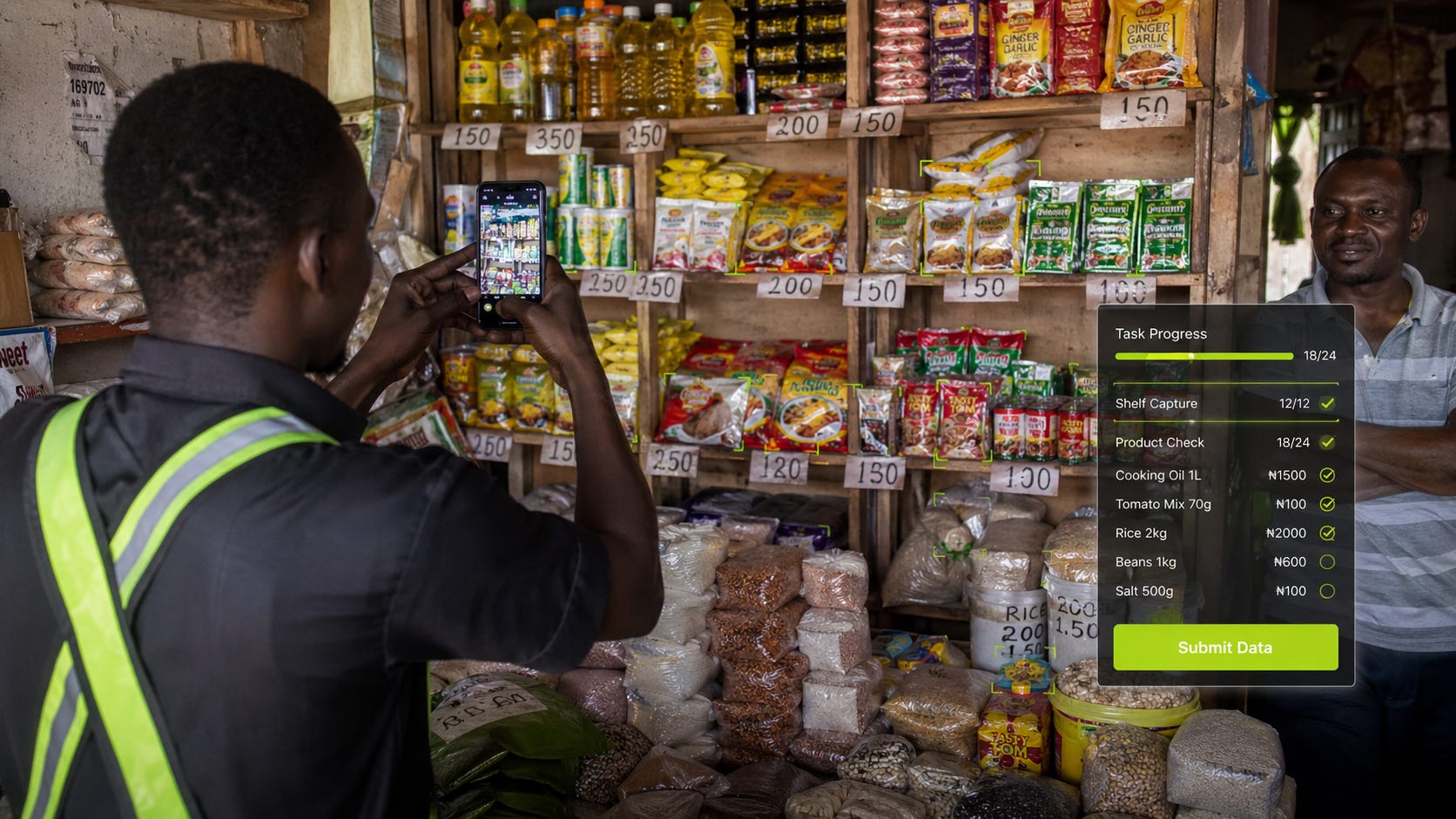
That shift creates a different kind of gap. The issue is not only that companies need more data. They need more representative data. Many systems still struggle with local dialects, mixed-language speech, slang, informal commerce, non-standard addresses, fragmented retail, regional product names and the messy physical environments where most people actually live. A chatbot may work well in formal English but fail when users switch between languages in a single sentence. A voice assistant may understand standard Spanish but miss local phrases in Peru, Colombia or Mexico. A commerce model may recognise a supermarket shelf in London, but not how a corner shop in Lagos, Karachi or Lima is organised.
The real-world data gap
This is why tasks are becoming interesting. A task is a structured activity completed by a real person in a real environment, with the output captured as audio, video, images, text or contextual metadata. It could mean recording natural speech in a local dialect, documenting how people describe common problems, checking product availability in a store, verifying a location, mapping a route, capturing a merchant workflow, or filming how an object is handled in a practical setting.
Some tasks support robotics and physical AI. Others support chatbots, speech recognition, translation, commerce intelligence, mapping, insurance, customer support, trust and safety, or local market research. The common thread is simple: companies need better data from the world outside their own bubble. They need signals from cost-conscious consumers, multilingual communities, gig workers, small merchants, informal retail environments and households that are often underrepresented in mainstream datasets.
For companies building products that are meant to work globally, this is no longer a nice-to-have. It is a product quality issue. A model that cannot understand how people actually speak, shop or navigate in high-growth markets will eventually hit a ceiling.
Why inDrive’s network matters
This is where inDrive can be useful. inDrive operates across a broad emerging-market footprint, with deep presence in cities where everyday life is often more fragmented, adaptive and locally specific than most global datasets capture. These are markets where consumers make active trade-offs around price, trust, speed and convenience; where payments, mobility, work and commerce often happen through hybrid online-offline behaviour; and where language is more fluid than formal datasets suggest. That gives potential partners access not just to users, but to lived context.
The inDrive audience is particularly relevant because these are not passive digital users. Many are experienced optimisers. They compare, negotiate, adapt and make decisions under real constraints. In cost-conscious environments, people are not simply looking for the cheapest option. They are weighing value, timing, trust and control in real time. That behaviour is commercially rich because it reveals how people decide when the trade-offs are real.
Drivers and couriers are a strong starting point for certain categories of tasks. They are already familiar with app-based workflows, location-based instructions, time-sensitive work and flexible earning opportunities. They move through neighbourhoods, merchant locations, streets and transport corridors every day. They understand local realities that are hard to script from a desk: which roads are usable, how small merchants operate, how people describe locations, how neighbourhoods change by time of day, and how instructions need to adapt when they meet reality.
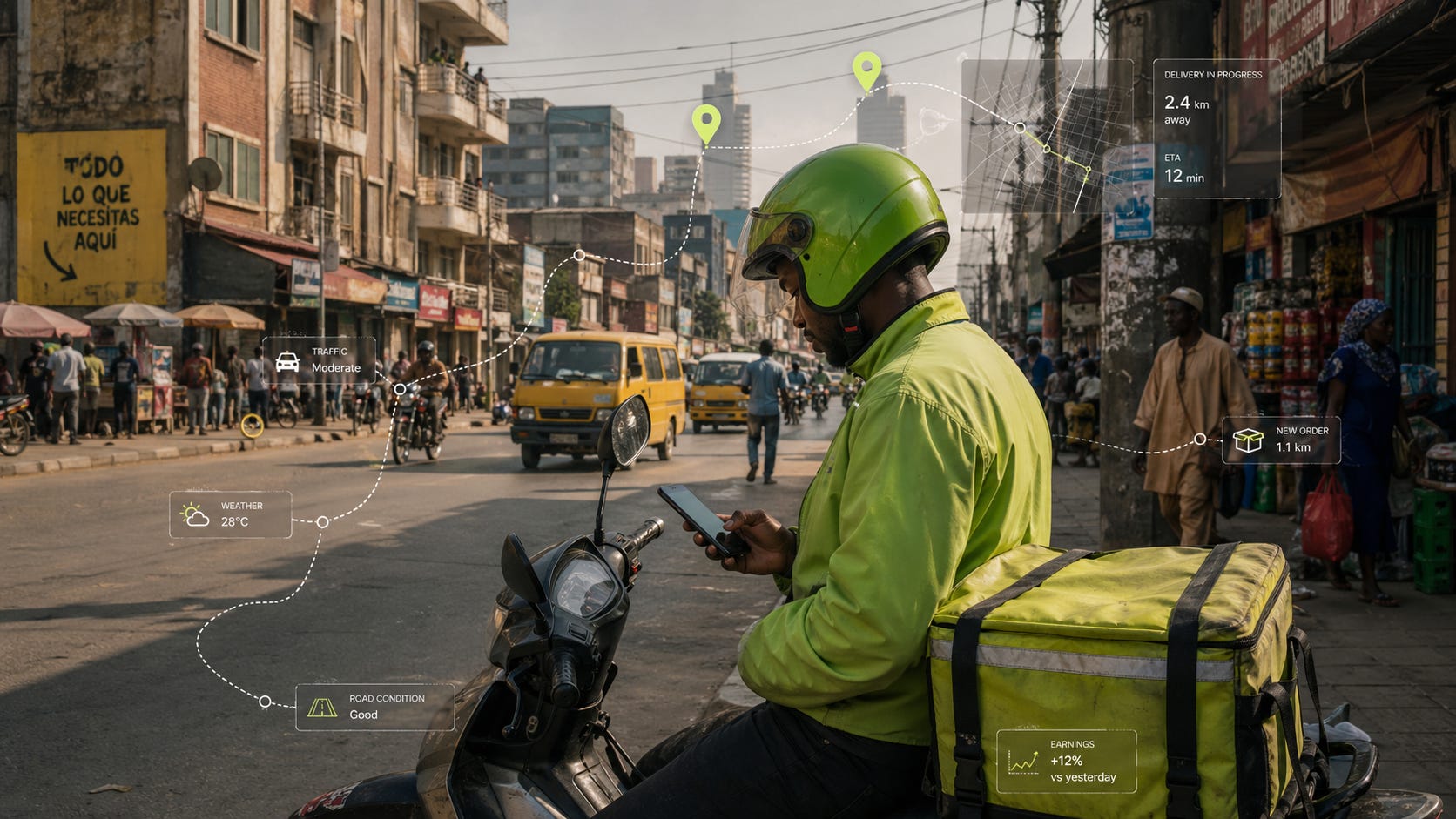
But the opportunity is broader than drivers alone. Some tasks are better suited to consumers, such as recording household language, testing chatbot prompts in dialect, describing product needs in local terms or capturing everyday routines. Others fit merchants, such as shelf checks, stock availability, product naming, pricing context or informal retail workflows. More specialised tasks, such as factory processes, repair work or technical handling, may require targeted recruitment and local partnerships. The real advantage is not treating all contributors as interchangeable. It is matching the right task to the right participant, market and context.
What partners can build with inDrive
For AI companies, that matching matters. A company building multilingual chatbots may need natural speech across languages, dialects, slang and mixed-language conversations. A commerce AI company may need product descriptions, shelf photos, informal retail workflows and local purchasing vocabulary. A logistics or mapping company may need neighbourhood-level data from places where formal address systems are weak. A robotics company may need first-person video of cooking, cleaning, object handling or workshop routines. These are different use cases, but they share the same underlying challenge: getting reliable data from real people in real contexts.
The value inDrive brings is not simply scale. Scale without context quickly becomes noisy. The stronger value is the combination of reach, local understanding, operational infrastructure and trust. inDrive already knows how to coordinate distributed participants across many markets, route work through an app, manage payments, build feedback loops and operate in places where standardised playbooks often fail. That matters because task data is not just collected. It has to be designed, explained, validated, paid for and repeated.
There is also a fairness dimension that should matter to any company building in this space. Data collection can easily become extractive if contributors are treated as invisible inputs into AI systems. Done well, it can create new earning opportunities through clear instructions, opt-in participation, transparent pay, consent-led workflows and tasks that fit local income patterns. This is not only ethically better. It is commercially better. Contributors who trust the platform are more likely to complete tasks carefully, follow instructions and remain available over time.
For partners, the proposition is practical. If you are building AI products that need broader language coverage, inDrive can help reach speakers and communities that are often missing from mainstream datasets. If you need real-world commerce data, inDrive can help access small merchants, neighbourhood behaviour and local purchasing context. If you need physical-world data, inDrive can help source diverse environments across homes, streets, shops and workplaces. If you need to test how products behave in cost-conscious markets, inDrive can help bring you closer to users who make active, real-world trade-offs every day.
This is the wider opportunity behind tasks. It is not just about filming chores for robots, although that may be one valuable use case. It is about building a bridge between AI companies and the parts of the world their models do not yet understand well enough. The next generation of AI will need to serve users who speak differently, shop differently, move differently and solve problems differently. That cannot be captured from the same narrow slice of the internet.
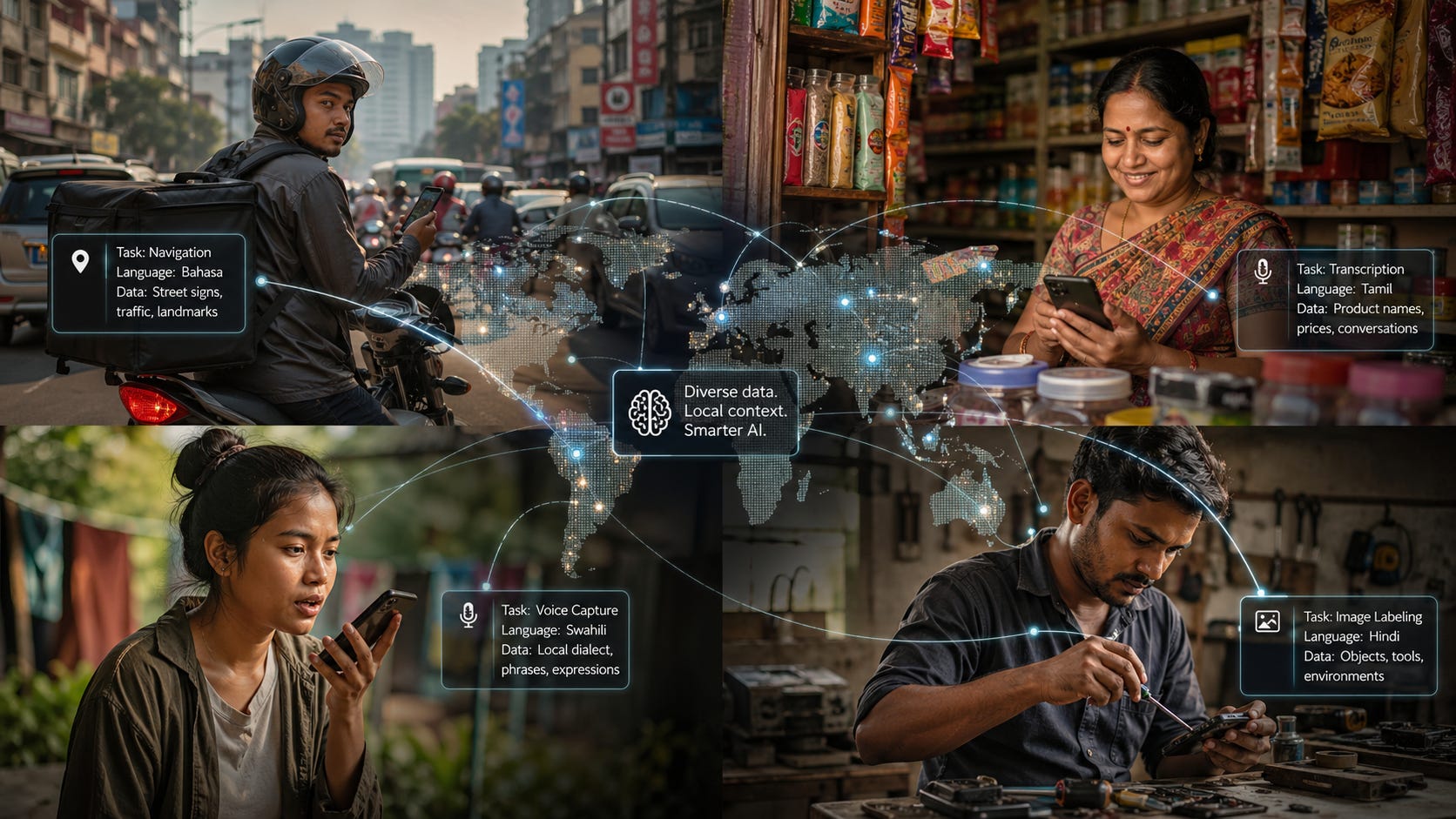
The old digital economy was built around attention. The next AI economy will increasingly depend on context: not just what people click, but how they speak, move, choose, work and live. For companies building global AI products, that context is becoming a strategic input.
This is where deliveries and data start to intertwine. A platform that already moves through the real world can help AI companies reach it more intelligently. inDrive is not trying to replace model builders, robotics labs or data infrastructure companies. It can be something just as useful: a partner that helps them access real people, real environments and real behaviours across markets that are too important to remain underrepresented.