What Real Purchasing Intent Looks Like in a Cost-Conscious Market
As consumers become more deliberate, advertising needs to get closer to how choices are really made

In our earlier article on cost-conscious consumers, we made a simple point: this is not just a story of people spending less. It is a story of people deciding more carefully. That matters for advertising, because the old digital model was built to read interest, not decisions. For years, platforms have tried to understand consumers indirectly, using clicks, searches and time spent on a page as stand-ins for intent. But that model becomes less reliable when consumers are highly cost-conscious, because the distance between interest and action starts to widen. People may appear interested in one thing, then choose something else entirely when they have to weigh price, urgency and value in real time.
That is where inDrive sits in a different place. Across 48 countries, users have completed more than 8 billion deals on the platform. Each one is more than a transaction. It is a negotiation, a live moment in which price, convenience, timing and personal preference are weighed against each other. Taken together, those negotiations offer a much clearer view of consumer behaviour than most digital platforms can access. They show not just what people look at, but how they decide when the trade-offs are real.
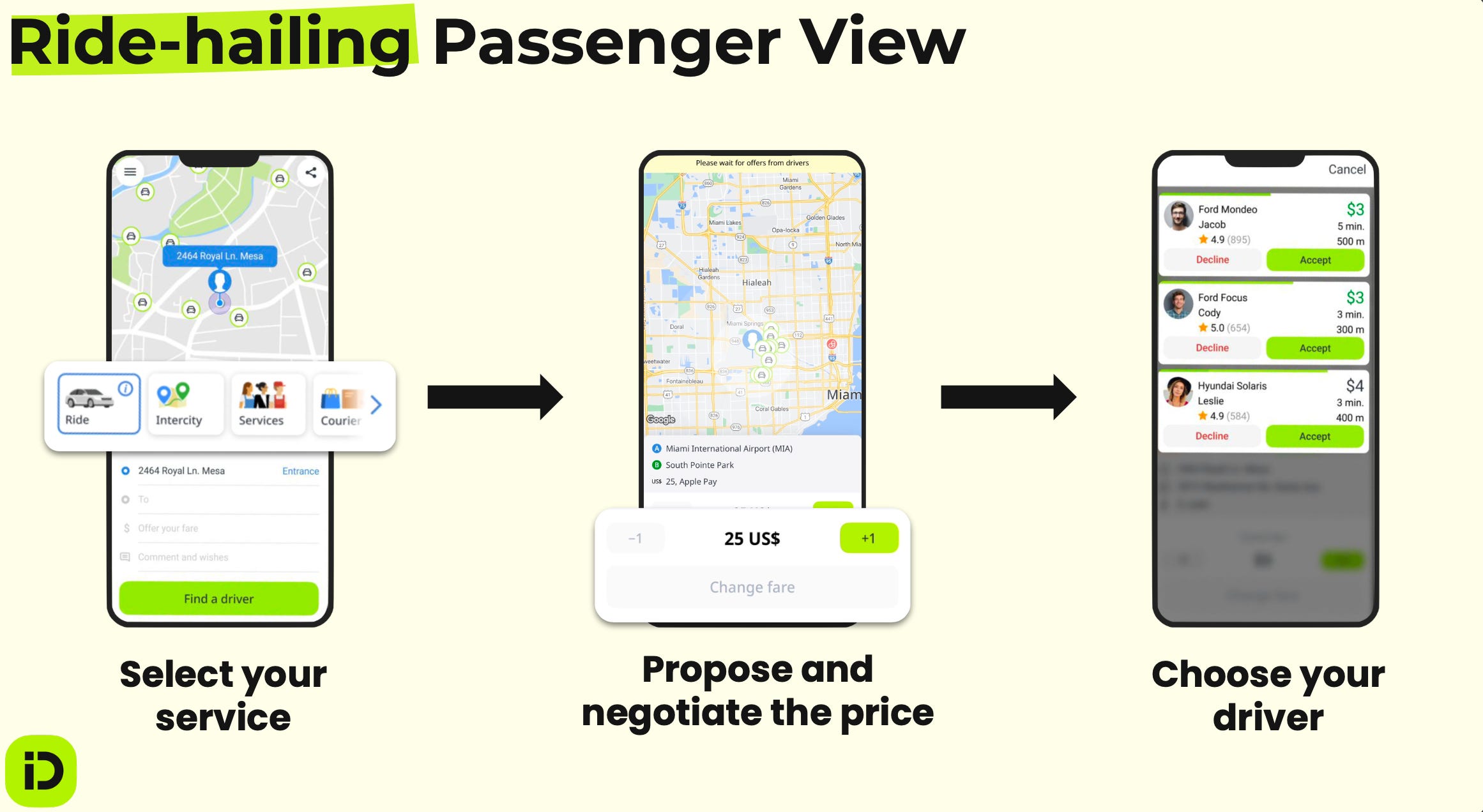
This is important because the old picture of the consumer as convenience-first is starting to look incomplete. In many markets, and increasingly well beyond them, people are not automatically paying for speed and ease whenever they can. They are making active trade-offs. A user may accept a longer wait for a lower fare on one trip, then decide that speed matters more on the next. The same person behaves differently depending on time of day, urgency, cash on hand and the purpose of the journey. The real insight is not just that consumers are price-sensitive. It is that they are adaptive.
Too often, cost-conscious consumers are treated as a narrow segment at the lower end of the market. That misses what is actually going on. In many of the markets where inDrive operates, consumers are not passive buyers reacting to price. They are experienced optimisers. They have grown up in environments where prices are not always fixed, where alternatives are fragmented, and where getting a good deal requires judgement. They compare, adjust and decide. They do not simply consume. They assess. That makes them more commercially interesting than many brands assume, because they are deeply engaged in the act of choosing.
As inDrive expands into new verticals, as we have explored in earlier pieces (here, here and here), we are in position to apply that same consumer and market insight across our portfolio, with strengthened cross-sell capabilities and enable us a clear way to create value alongside capital.
This is also what makes the inDrive audience valuable for Brands. Most ad platforms segment people by demographics, interests or browsing history. inDrive adds something more useful: observed economic behaviour. On the platform, it is possible to see how users respond to price, how they balance cost against speed, and how those choices shift depending on context. That creates a stronger signal for brands, especially those trying to reach consumers who think hard about value and act on it. It is one thing to know that someone has engaged with travel, payments or food content. It is another to understand how they behave when deciding what is actually worth paying for.
Enter inDrive Ads.
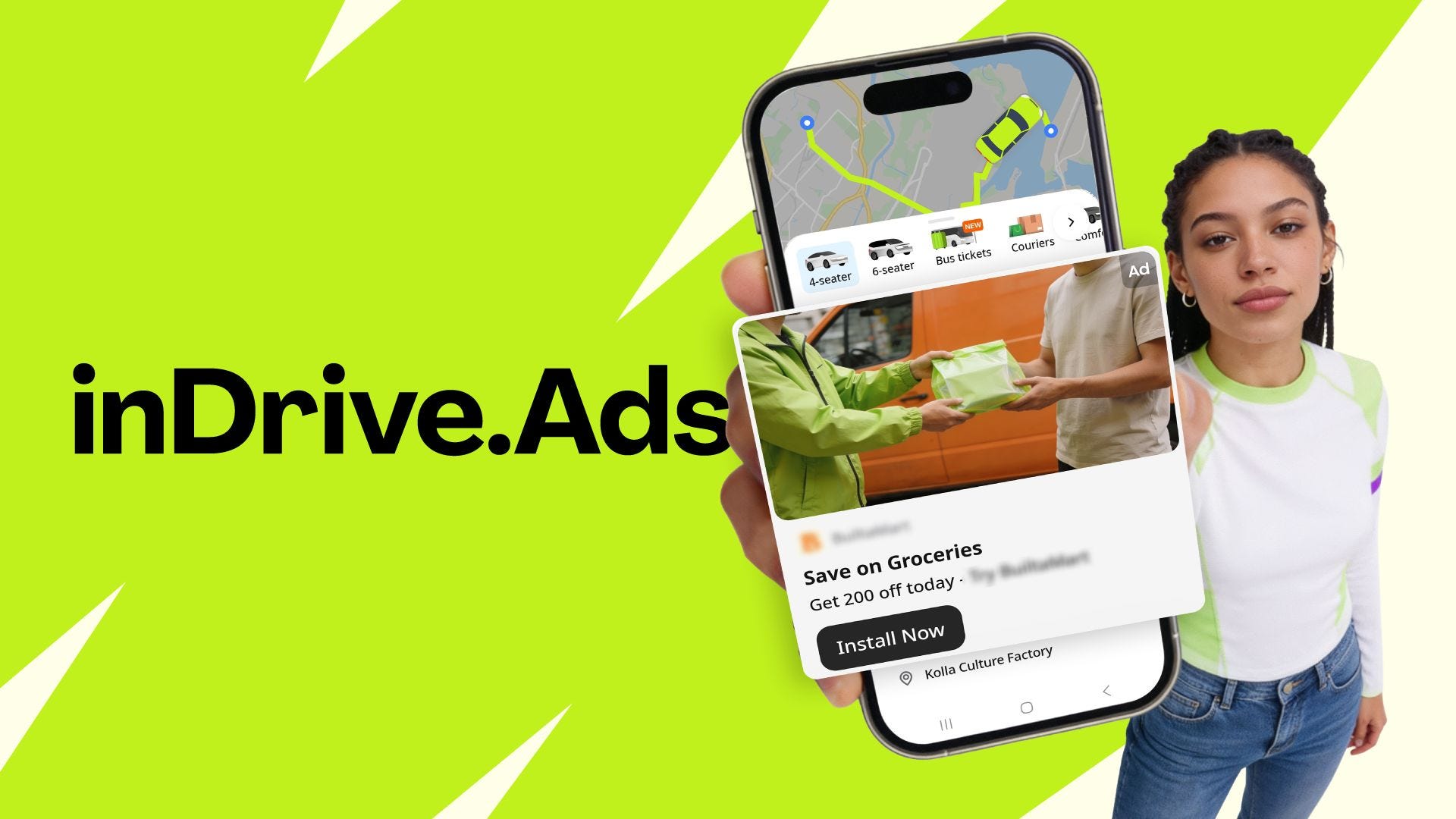
That is where inDrive Ads becomes strategically interesting. It is not just another media placement inside an app. It gives brands access to consumers who are already in a decision-making mindset, often while they are moving through the world and managing real constraints around time and money. A commuter comparing ride options may be especially receptive to a savings product, a payments offer or a low-cost food promotion. A traveller on the way to the airport may be more open to insurance, connectivity or travel services. A late-night rider may care most about safety, convenience or reliability. In each case, context does more of the work that targeting used to do.
That matters more now because the old promise of digital advertising is weakening. Privacy changes, signal loss and rising acquisition costs have all made targeting less precise and, in many cases, less efficient. At the same time, consumers have become quicker to filter out generic brand messages. Relevance still matters, but increasingly it depends less on following people around the internet and more on meeting them in moments that make sense. inDrive Ads is well placed for that shift because it sits closer to lived intent than most platforms do. Not inferred intent, but real intent expressed through actual trade-offs.
There is a broader business logic behind this too. Advertising matters not only because it is high margin, but because it gives platforms another way to grow without pushing more of the cost onto users. In digital commerce, advertising is already becoming a meaningful part of the model and can account for a material share of transaction value over time. For inDrive, that matters because the company’s model has always been tied to fairness, affordability and low commissions. Ads can support growth while helping keep the core service accessible, which makes them strategically more important than a simple monetisation layer.
If the first era of digital advertising was about capturing attention, the next one is likely to be about understanding decisions. The most valuable platforms will not just know what people look at. They will understand what people choose when the trade-offs are real. That is what 8 billion deals begin to show: not a passive consumer, but an active one; not someone mindlessly consuming, but someone constantly weighing value. For brands, that is more than a large audience. It is a sharper lens on how people actually behave, and a better way to reach them when it counts.
To explore partnerships with inDrive Ads, please contact ads@indrive.com.